

From the corn capital
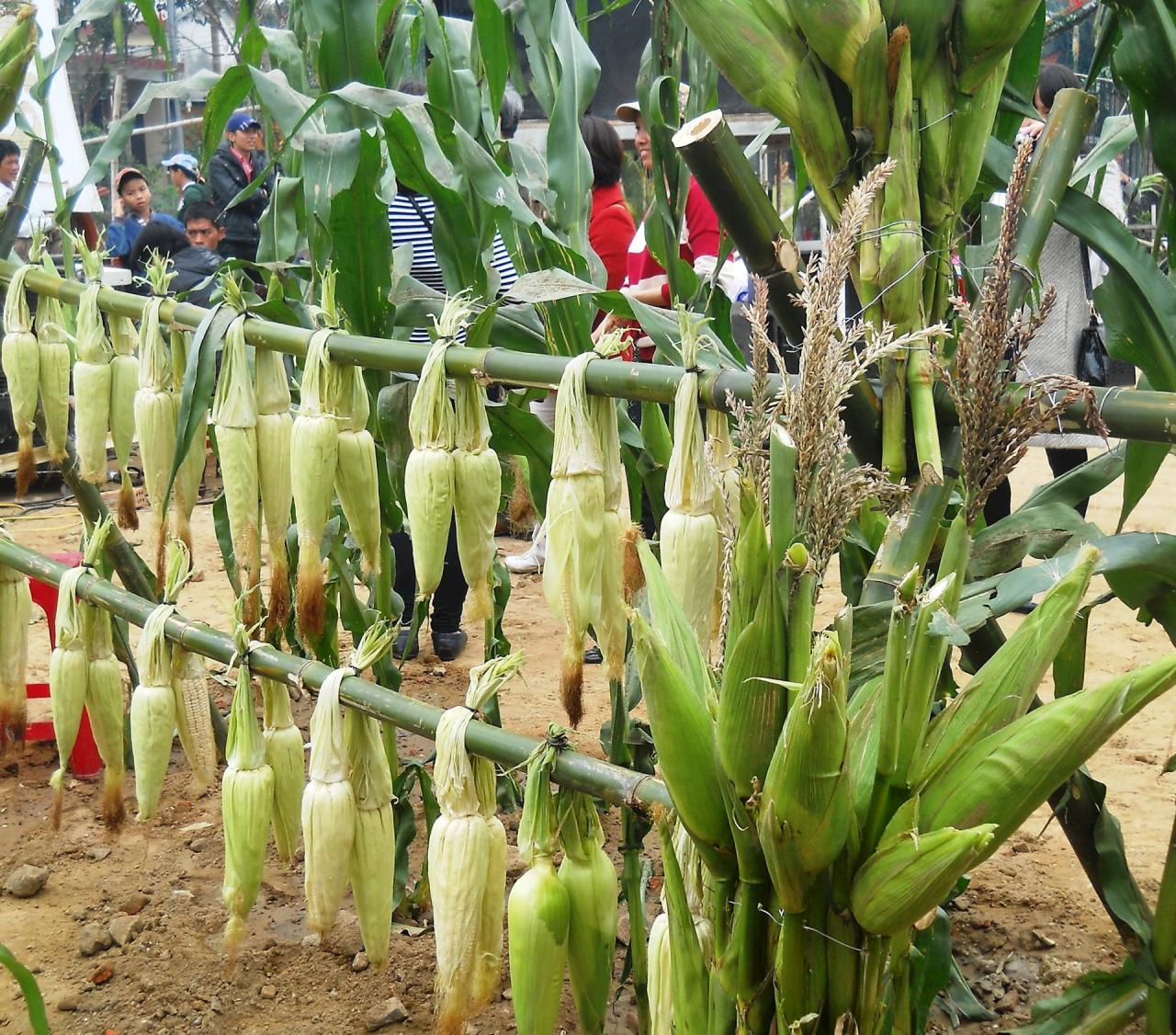
Hoi An has entered the days of March. Gentle breezes chase each other across the streets. From early morning, the corn fields on the other side of the Hoai River have been bustling with greetings. Many years later, the “Cam Nam sticky corn festival” is no longer just for the people of Hoi An, just for the plants of the riverside beach.
Now, on street corners, vendors selling sticky rice with corn and beans have appeared, inviting customers. Through many years and many seasons, from January to February, Hoi An enters the season of... sticky rice with corn and beans.
In the past, this was a snack that mothers and grandmothers saved for their children when they came back from the market. Now it is not only a breakfast dish for school-going children or people rushing to get to work, but also a specialty that has a sweet and rich taste in the hearts of tourists from far away.
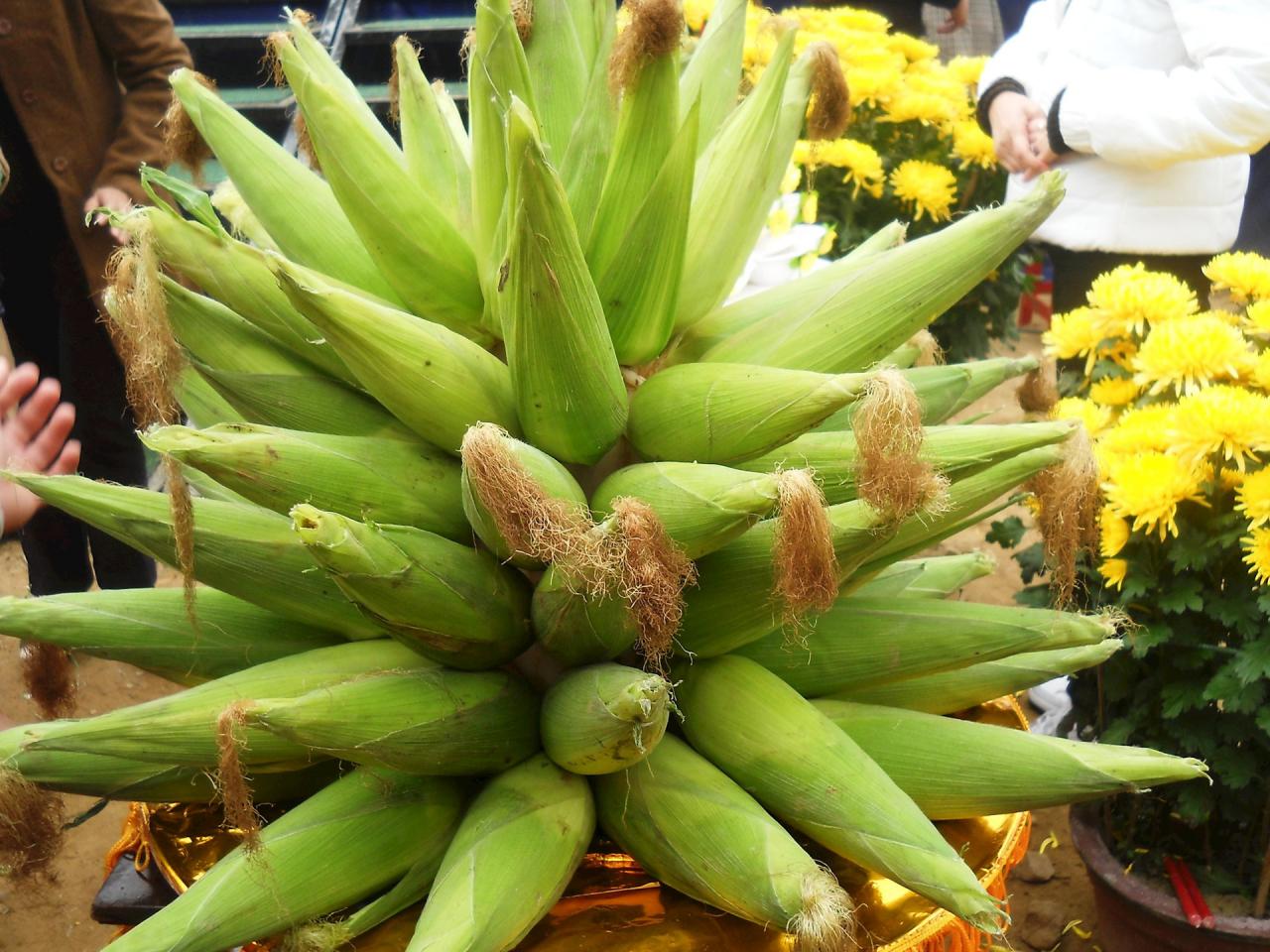
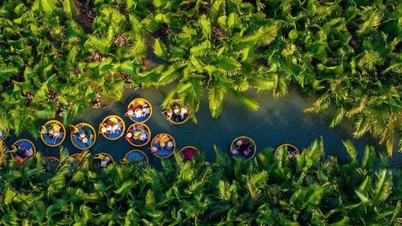
Cam Nam is the land of corn. From afar, Cam Nam looks like a small island next to the old town, surrounded by branches of the river downstream of Thu Bon. Alluvium creates fertile, rich land. The downstream branches of the river feed the people here with products bestowed by nature such as mussels, fish, brackish water shrimp, cassava, potatoes, alluvial corn... Cam Nam farmers take advantage of favorable conditions to specialize in growing corn every year, seasonally, like rice.
Cam Nam corn delicacies have long been a part of Hoi An's heritage. Without a warm greeting or an enthusiastic invitation, people who come and go still want to enjoy and keep the taste of a boiled corn, a bowl of corn sweet soup, grilled corn or a package of corn sticky rice. Especially in the early spring weather, the warm sunshine and the cool breezes make visitors feel more fully the deliciousness of the small, pretty corn sticky rice package.
Sticky rice with corn and beans on the street
Cooking sticky rice with corn until it is done and retains its stickiness and characteristic aroma also requires a special secret. If the corn has small, light yellow kernels, it can be used for stir-frying or frying. To have delicious grilled or boiled corn, you must choose corn that is not too old and not too young, so that the corn will be sticky.
As for the sticky rice with corn and bean, you must choose plump, white, fragrant, sticky corn. The corn is at the stage of milk production and plump. When the outer silk layer is peeled off, the corn kernels are opaque white. If you want delicious sticky rice with a pure sweet taste, you should pick the corn near dawn, when the fog is still thick, which is the time when the corn absorbs the most nutrients and water.
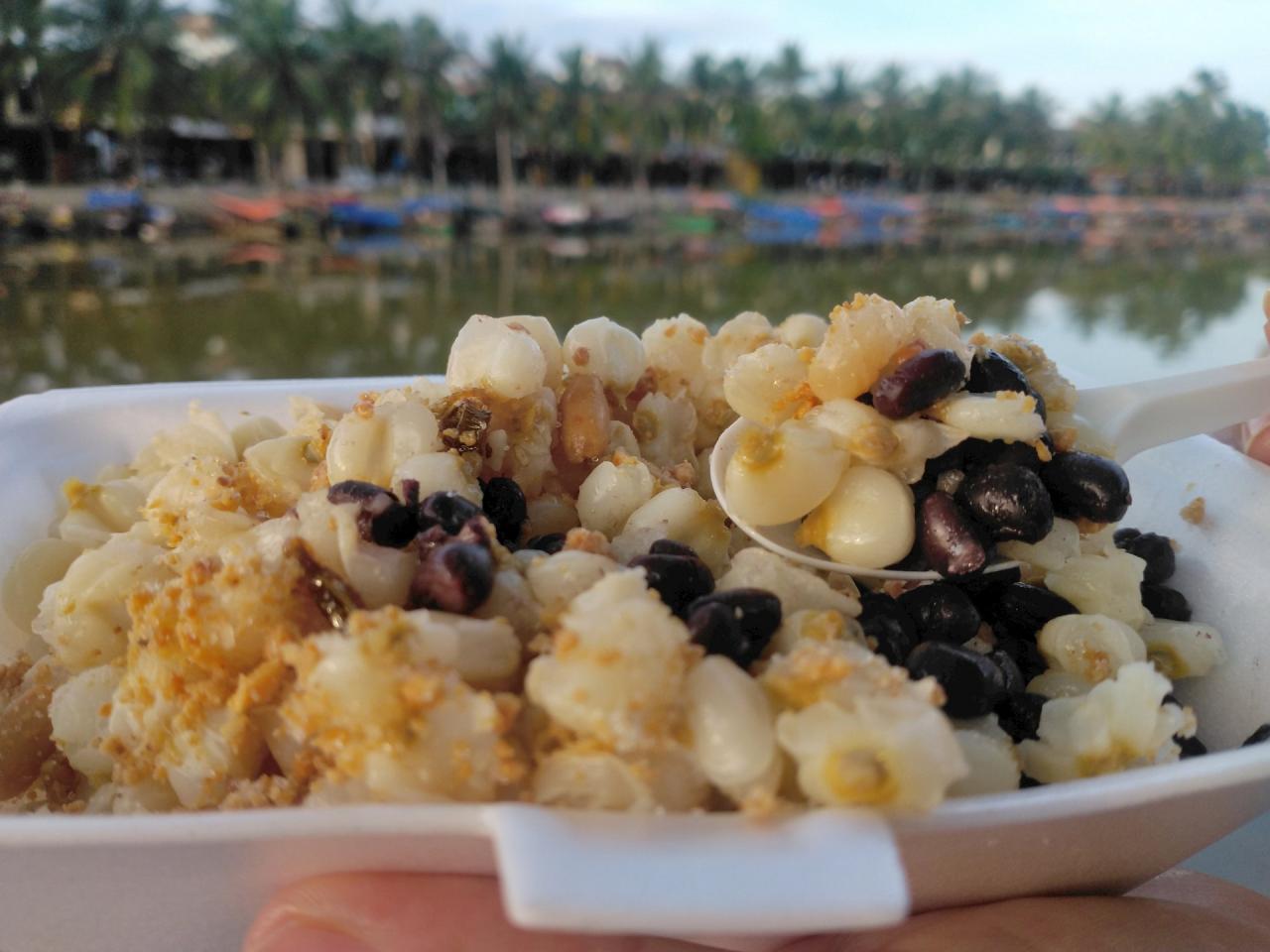
Freshly picked corn, peel off all the kernels, rinse, clean and remove the kernels that float to the surface. Then put the corn in lime water and boil for about half an hour. Quickly pour it into a tight-fitting bamboo basket and wait for the corn to cool, then rub until the husks come off. Remove the husks and rinse several times to clean the corn thoroughly and remove the lime smell.
Next, add the steamed black beans and corn. Place the pot of sticky rice and corn next to the red ash and continue roasting and pounding the peanuts until the salt and beans are mixed together and as small as rice bran.
Reach for a pair of chopsticks stuck in a bamboo tube in the corner of the kitchen, fluff the corn evenly, then gently cover the bottom of the basket with a layer of banana leaves or lotus leaves before serving the sticky rice.
To keep warm, fill the basket with sticky rice, combine with a layer of leaves, and place a towel on top to help the corn sticky rice retain heat but not smell.
Every time a customer buys, the seller just needs to scoop out the right amount of sticky rice, carefully sprinkle bean salt on top to suit each customer's taste.
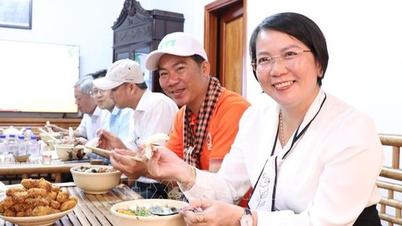
Tourists can hold the hot sticky rice package while walking around the old town and enjoying it. Although it is just a small, rustic snack made from available ingredients in the fields and gardens, with a little bit of skill, this popular dish from the Quang people is enough to attract many diners...
Source

![[Photo] Binh Trieu 1 Bridge has been completed, raised by 1.1m, and will open to traffic at the end of November.](https://vphoto.vietnam.vn/thumb/1200x675/vietnam/resource/IMAGE/2025/10/2/a6549e2a3b5848a1ba76a1ded6141fae)






















































Comment (0)